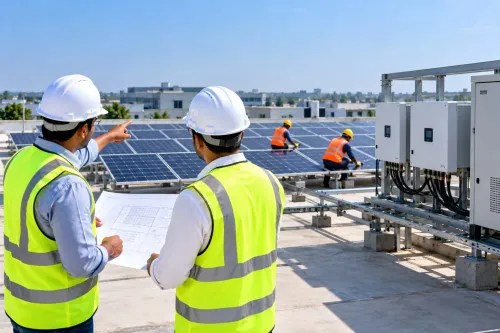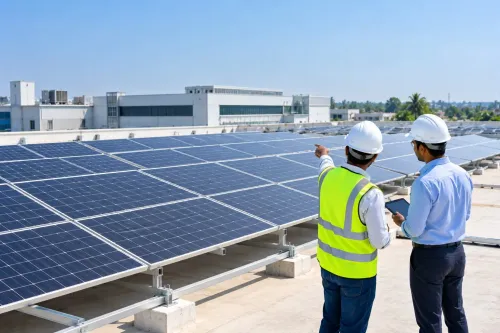

Businesses considering solar often discover that the technology itself is only one part of the project. Site assessment, system sizing, engineering, component procurement, installation, electrical integration, testing, commissioning, documentation, and ongoing support can involve multiple stages.
Solar Turnkey Projects are designed to bring these stages into a coordinated project structure.
For businesses in Nashik, Maharashtra, this approach can be particularly useful when internal teams want to adopt solar without independently managing several technical contractors and equipment suppliers.
What a Turnkey Solar Project Includes
A turnkey project generally aims to deliver a solar system that is ready for operation after the agreed implementation process is completed.
Depending on project scope, the process can include:
- Site assessment
- Energy consumption analysis
- Solar capacity planning
- System engineering
- Equipment selection
- Procurement
- Mounting structure installation
- Panel installation
- Inverter installation
- Electrical integration
- Testing
- Commissioning
- Monitoring setup
- Project documentation
The exact scope should always be confirmed before work begins.
One Project Structure Reduces Coordination Complexity
Consider a factory planning a sizeable rooftop solar system.
Without an integrated project structure, its management team may need to coordinate panel vendors, structural contractors, electricians, inverter suppliers, installation teams, and commissioning specialists separately.
Every additional interface creates another point where scheduling, technical specifications, responsibilities, and documentation must be aligned.
A turnkey model can reduce this complexity by establishing clearer project responsibility.
Site Assessment Still Comes First
Turnkey does not mean standardized.
Every building has different energy requirements and physical conditions. A hospital may have significant continuous electricity demand. A school may use most electricity during daytime hours. A manufacturing plant may operate multiple shifts with high machinery loads.
The proposed solar capacity therefore needs to reflect the actual property.
A detailed assessment should review electricity bills, load patterns, installation space, shading, roof conditions, electrical infrastructure, and future consumption expectations.
Equipment Selection Needs Technical Logic
The quality of a solar plant depends on more than panel efficiency.
Inverters, mounting structures, protection equipment, cables, connectors, earthing systems, and monitoring equipment all contribute to system performance and reliability.
Turnkey proposals should clearly specify major equipment rather than providing only a total project price.
Buyers should also review applicable warranties and understand which party is responsible for different components.
Project Timelines Need Realistic Planning
Solar implementation involves several sequential activities. Site readiness, material availability, engineering approval, installation complexity, electrical integration, and project size can all affect timelines.
Commercial customers should therefore ask for a defined implementation plan.
For facilities where operations cannot be interrupted easily, installation scheduling should also consider production shifts, patient activity, school hours, office operations, and site safety.
Monitoring Continues After Installation
Commissioning marks the beginning of system operation, not the end of solar management.
Monitoring generation helps users understand whether the system is producing electricity as expected. Periodic cleaning, inspection, and maintenance can also support consistent performance.
SunsetLife Solar Pvt. Ltd. works with customers evaluating solar implementation across Nashik. For organizations seeking fewer coordination challenges, Solar Turnkey Projects can provide a practical pathway from initial assessment through system commissioning.
The strongest turnkey solution is not simply the package with the fewest customer responsibilities. It is one where scope, equipment, engineering assumptions, timelines, warranties, and post-installation expectations are clearly defined before implementation begins.
Keywords