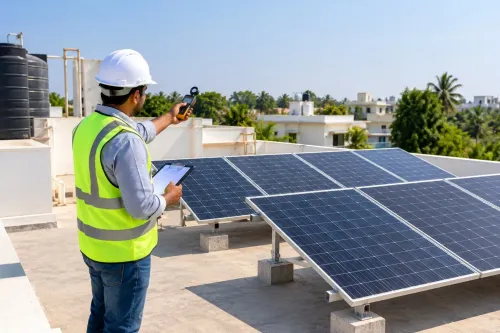

A hospital cannot size solar panels from its monthly electricity bill alone. You must first identify which circuits require uninterrupted power, measure when those loads operate, confirm that the site can safely carry and maintain the equipment, and define how solar will interact with utility supply, batteries, UPS systems, and diesel generators. By the end, you will have a practical checklist for deciding whether a rooftop, carport, or ground-mounted project is technically and financially suitable.
Key takeaways
- Build an essential-load schedule by distribution panel before sizing the system.
- Use interval demand data across seasons, not a single electricity bill.
- Check roof structure, shading, access, fire routes, and alternative installation sites.
- Separate outage-critical circuits from normal loads when choosing backup architecture.
Build an Essential-Load Schedule Before Sizing Solar
A hospital solar load assessment must begin with circuits that must remain energised during an outage, not the building’s total connected load. Create an essential load schedule for each distribution panel, showing the circuit, clinical function, running demand, operating hours, and required backup duration.
| Branch | Typical circuits | Sizing treatment |
|---|---|---|
| Life-safety loads | Fire alarm, emergency lighting, exit signs, fire pumps, nurse-call systems | Highest priority; keep energised through transfer and battery autonomy |
| Critical branch loads | Operating theatres, ICUs, emergency departments, medical gases, selected lifts and ventilation | Record individually; include motor starts and clinical operating limits |
| Nonessential loads | Offices, kitchens, general comfort cooling, signage and decorative lighting | Exclude from emergency capacity unless a documented operational need exists |
Collect these fields before selecting inverter, battery, generator, or PV capacity:
- Connected kW, measured running kW, kVA, power factor, voltage, phase, and circuit identifier
- Starting current and locked-rotor kVA for chillers, pumps, air-handling units, lifts, compressors, and imaging equipment
- Required operating hours and minimum autonomy in kWh for each circuit
- Day, night, weekend, monsoon, and seasonal operating patterns
- Existing UPS and generator capacity, transfer times, fuel runtime, and circuits already backed up
- Panel schedules, single-line diagrams, protection settings, and outage logs
Do not assume grid-tied PV will supply these loads during an outage; standard inverters shut down when utility voltage disappears. Size an islandable architecture against hourly or sub-hourly demand and solar output, including transient peaks rather than average kW alone.
Use Real Hospital Demand Data, Not One Electricity Bill
One electricity bill cannot reveal the hospital’s solar requirement. Obtain 12 months electricity bills and pair them with 15-minute or 30-minute interval-meter data, because PV output changes hourly while hospital demand continues overnight.
Build the demand record from:
- Day and night load profiles for weekdays, weekends, and seasonal occupancy
- Monsoon and summer consumption, including changes in ventilation and cooling
- Recorded outages, their duration, affected circuits, and generator operation
- Tariff periods, energy charges, demand charges, and export rules
- Sanctioned load, monthly maximum demand, connected load, and power factor
- Planned additions such as imaging equipment, wards, operating rooms, or chillers
Compare the interval demand with a local solar-production model, not a generic annual sun-hours figure. This shows how much PV generation the hospital can use directly, how much falls outside operating hours, and whether a battery would shift daytime energy into the night.
Use maximum demand to check the service and inverter operating envelope, but do not size solar from that single peak. A brief equipment start-up can create a peak that solar will not reliably cover.
Review power factor correction before finalising capacity. Poor power factor raises apparent demand and can distort transformer, switchgear, and demand-charge calculations; correcting it first prevents an oversized electrical design.
For outage planning, compare normal demand with the written essential-load schedule and generator capacity. Solar intended for life-safety or critical circuits requires a separate operating sequence for utility failure, battery discharge, generator start, and restoration.
Test the Roof, Shade, Structure, and Alternative Sites
A hospital roof is suitable only after a rooftop solar structural assessment confirms that it can carry the array and resist site-specific forces. The engineer must check existing dead load, the allowable dead load, ballast or attachment forces, wind uplift, seismic loads, parapets, drainage paths, and rooftop equipment.
Inspect roof age, warranty, waterproofing and corrosion before procurement. If the roof is near replacement, coordinate that work first; removing and reinstalling panels later adds cost, disrupts generation, and can void the warranty.
Shade analysis must include nearby buildings, water tanks, trees, exhaust stacks, lift rooms, and seasonal sun angles. Use local solar modelling with hourly or sub-hourly hospital demand data rather than multiplying capacity by generic annual sun-hours.
Require the survey to mark:
- Firefighter access routes and clearances around equipment
- Safe maintenance and future roof-replacement routes
- Drainage outlets that panels, ballast, or cable routes could obstruct
- Roof zones that cannot accept penetrations or concentrated ballast
- Corroded steel, membrane damage, ponding water, and loose parapets
Choose another site when the roof fails the load review, has a short remaining life, suffers heavy shade, or cannot preserve access and drainage.
| Option | What it offers | When it applies |
|---|---|---|
| Carport solar | Generation plus covered parking; fewer roof penetrations | Parking areas have adequate clearance and structural foundations |
| Ground-mounted solar | Easier access, tilt adjustment, and future expansion | Hospital land is available without conflicting with emergency access, drainage, security, or clinical expansion યોજ |
Choose the Power Architecture for Outages and Critical Equipment
Use an islandable solar system connected to designated essential-power panels, not a conventional grid-tied array. A standard PV inverter shuts down when utility voltage disappears, so it cannot provide hospital solar backup without compatible controls, storage, and an approved islanding sequence.
| Option | Outage role | Limitation |
|---|---|---|
| Grid-tied PV | Reduces daytime utility demand | Stops during a grid failure unless engineered for islanding |
| UPS system | Keeps life-safety and sensitive equipment powered without interruption | Limited runtime and unsuitable for large sustained loads |
| Battery energy storage | Supports critical circuits, absorbs PV fluctuations, and bridges generator start-up | Requires adequate inverter power, usable kWh, cooling, and replacement planning |
| Diesel generator | Supplies extended backup, including overnight and low-sun periods | Fuel, emissions, noise, maintenance, and starting transients require management |
Design the system around life-safety and critical branches rather than the hospital’s full demand. Put operating theatres, intensive-care beds, emergency treatment, medical gases, selected imaging, laboratory refrigeration, water pumps, lifts, and required ventilation on the written backup schedule; leave noncritical offices and decorative loads shed first.
Specify diesel generator integration with the battery inverter, automatic transfer switches, and protection settings. The sequence should preserve UPS power, start the generator, synchronise permitted sources, and recharge batteries without overloading the generator. Check chiller, pump, elevator, imaging, and air-handling motor starts, not only average kW.
Require an interconnection and protection-coordination study covering anti-islanding, export limits, switchgear changes, transformer capacity, and maintenance bypasses. Never accept an architecture that removes a critical panel, generator, or transfer switch from service without an approved temporary-power plan.
Plan Interconnection, Construction Controls, and Whole-Life Cost
Require a written utility interconnection study and a whole-life cost plan before appointing the EPC contractor. The lowest installation quote can become the most expensive option after grid upgrades, shutdowns, or roof repairs.
1. Obtain the utility’s approval pathway, sanctioned-load requirements, export limit, metering arrangement, and protection settings. Require switchgear modifications, transformer or service upgrades, a protection-coordination study, anti-islanding protection, and an operating sequence for PV, batteries, the utility supply, and emergency generators.
2. Demand a construction safety plan covering lockout/tagout, arc-flash boundaries, fire access, fall protection, temporary power, and work near live clinical circuits. Specify rapid shutdown equipment, its initiation device, conductor boundaries, labels, and a demonstration that firefighters and facility staff can reach and operate it.
3. Make occupied-area work subject to an infection control risk assessment. The plan must control dust, vibration, noise, water entry, roof openings, ventilation interruptions, barriers, air monitoring, cleaning, and permitted work hours. Require an approved temporary-power plan before taking a critical distribution section, generator, or transfer switch out of service.
4. Price the roof’s remaining warranted life before signing. Include array removal and reinstallation if replacement is due, plus monitoring, insurance, access or vegetation maintenance, battery and inverter replacement, export or standby tariffs, demand charges, and lost production during shutdowns.
Ask SunsetLife Solar Pvt. Ltd to show these items as separate line items, assumptions, exclusions, and hospital responsibilities; that format makes competing EPC proposals comparable. Ensure the contract also defines commissioning tests, response times, spare parts, warranties, and performance reporting.
Related products
 | Solar Panel Installation Solar Panel Installation Services We provide end-to-end Solar Panel Installation Services, including site survey, system design, installation, testing, and commissioning. View product → |
 | Commercial Solar Rooftop System Commercial Solar Rooftop System The Commercial Solar Rooftop System is a cost-effective solution for offices, shops, malls, hospitals, schools, and commercial buildings. View product → |
Frequently asked questions
Why should hospitals create an essential-load schedule before sizing solar?
The schedule identifies circuits that must stay energised during an outage and records each circuit’s clinical function, demand, operating hours, and required backup duration.
What electricity data should a hospital use for solar planning?
Use real demand data across operating conditions and seasons, including interval readings, maximum demand, load profiles, and generator operation rather than relying on one electricity bill.
What site checks are needed before installing hospital solar panels?
Inspect roof condition and structural capacity, shading, equipment access, fire routes, drainage, maintenance space, and alternative sites such as car parks or ground-mounted areas.
How should a hospital choose its solar power architecture?
Decide which circuits require uninterrupted power, then compare grid-tied solar, battery storage, generator coordination, automatic transfer equipment, and dedicated critical-load distribution.
What costs and approvals should hospitals plan for?
Include interconnection studies, protection changes, metering, construction controls, shutdown planning, maintenance access, equipment replacement, battery costs, and whole-life operating costs.
Related products
 | Hybrid Solar Power System Hybrid Solar Power Systems combine the benefits of on-grid and off-grid solutions. View product → |
 | Off-Grid Solar Power System Off-Grid Solar Power Systems operate independently from the utility grid and include battery storage. View product → |
 | On-Grid Solar Power System On-Grid Solar Power Systems are connected to the electricity grid, allowing users to export excess power and benefit from net metering. View product → |