
A commercial solar project can fail financially before construction begins if the load data, roof condition, export assumption, or contract scope is wrong. By the end, you will know how to assess a site, review an EPC design, verify approvals and commissioning tests, and compare proposals on lifetime value rather than quoted price alone.
Key takeaways
- Document roof condition, energy use, and sanctioned load before design.
- Require yield, equipment, drawings, cable routes, and protection studies in the EPC scope.
- Assign Maharashtra grid approvals and meter work to named parties in writing.
- Compare warranties, testing records, exclusions, and performance guarantees—not only price.
What must be established before a commercial solar design begins?
Before design begins, establish whether the site can host the system, use its energy, connect it legally, and justify its cost. A solar EPC feasibility study turns those questions into documented design constraints.
1. Collect the electricity baseline. A commercial solar load analysis should use at least 12 months of monthly electricity consumption data, plus interval data when available. Record the sanctioned load, sanctioned voltage, tariff structure, operating hours, demand charges, and daytime consumption; roof area alone cannot determine the system size.
2. Confirm the electrical limits. Check the facility’s transformer capacity, main incomer, switchgear, protection settings, and proposed point of interconnection. Fix the utility’s export assumption before pricing: the interconnection study could require an export limit, zero-export controls, protection changes, or transformer upgrades.
3. Inspect the site in detail. The survey must document roof structure, remaining membrane life, drainage, parapets, skylights, shading, wind exposure, fire access, equipment routes, cable paths, and space around existing electrical equipment. A roof due for replacement can make an otherwise attractive project expensive through later removal and reinstallation.
4. Test financial suitability against the tariff and operating pattern. Compare expected self-consumption, permitted export, annual energy yield, capital cost, maintenance, financing, and roof-renewal costs. Reject or redesign the project if energy cannot be used, exported, or valued at a level that supports the investment.
How does the EPC team turn site data into an engineered project?
Interval consumption data sets solar system sizing more reliably than roof area. The EPC team matches daytime demand, sanctioned load, transformer capacity, export limits, and future expansion plans to a DC array and AC inverter capacity. Oversizing the array can increase clipping or unwanted export; undersizing leaves savings unused.
The team then selects the configuration: module layout, string design, inverter type, operating voltage, mounting arrangement, and cable routes. An energy-yield estimate models irradiation, tilt, azimuth, shading, temperature, soiling, inverter losses, degradation, and grid downtime.
It predicts annual production, not a guaranteed monthly output, and it must not be confused with capacity factor or module efficiency.
Design becomes buildable through drawings and calculations that installers, inspectors, and the utility can check. Ask for:
- A single-line diagram showing modules, combiner equipment, inverters, isolators, protection, meters, transformers, and the point of interconnection
- Module and string layouts, cable schedules, equipment datasheets, and a bill of quantities
- Structural calculations, shadow analysis, earthing and lightning protection drawings, and the protection study
- A construction schedule identifying shutdowns, access routes, fire clearances, and utility interface work
Procurement follows the approved design rather than a generic equipment list. The EPC team confirms module and inverter compatibility, delivery lead times, replacement terms, certifications, and warranty conditions before ordering. Approved substitutions require a documented design review; otherwise a cheaper component can invalidate calculations, delay approvals, or reduce yield.
Serial numbers and supplied specifications are recorded for commissioning and handover.
What happens during construction, testing, and commissioning?
The contractor verifies every installed circuit against the approved design before energisation. Solar construction includes secure mounting, weatherproof cable entries, correct conductor routing, earthing and bonding, labelled isolators, fire-access clearances, and protection against roof and electrical hazards. A visual inspection catches loose hardware or damaged cables before testing begins.
IEC 62446-1 commissioning is a documented process, not the act of switching on the inverter. The test record should identify the circuit, instrument, date, result, and any deviation:
- Confirm string polarity, conductor continuity, and correct connection at the inverter.
- Perform insulation resistance testing with the array isolated from sensitive electronics and within the manufacturer’s permitted test voltage.
- Record open-circuit voltage and operating current, then compare them with the design values.
- Verify earthing, protective devices, disconnects, labels, emergency shutdown, and inverter fault responses.
Incorrect insulation-resistance testing can damage modules, optimizers, monitoring equipment, or inverters. The commissioning team then checks inverter startup, monitoring data, alarms, communications, phase sequence, and export-control settings before controlled grid synchronisation.
Formal handover requires more than a generating system. Request the as-built drawings, including the final single-line diagram and string layout, together with equipment serial numbers, datasheets, warranties, permits, approvals, test reports, monitoring credentials, shutdown procedures, and maintenance instructions.
The owner should sign only after unresolved defects, safety observations, and training responsibilities have been recorded with a closure date.
Which approvals and responsibilities control grid connection in Maharashtra?
Fix the utility’s point of interconnection and export assumption before final pricing. A Maharashtra commercial solar approvals process can impose an export limit, protection change, transformer upgrade, or zero-export controller after the design is complete.
| Party | Main responsibility | Control point |
|---|---|---|
| Distribution utility | Reviews the net metering application, conducts the utility interconnection study, approves capacity and protection, installs or approves metering, and grants synchronisation permission. | Feasibility, agreement, meter, synchronisation |
| Owner | Provides title, sanctioned-load, electricity-bill and tax documents; appoints authorised representatives; signs agreements; pays utility charges; and accepts operating restrictions. | Application and commercial decisions |
| EPC contractor | Prepares the single-line diagram, protection details and application pack; answers utility comments; supplies compliant equipment; installs, tests and submits commissioning records. | Technical submission through energisation |
| Structural consultant | Issues the roof or foundation assessment, specifies reinforcement, and certifies that the mounting system will not compromise the structure. | Before mounting approval |
| Electrical Inspector | Performs the electrical safety inspection where required, checking installation safety, earthing, protection and statutory compliance before energisation. | Safety clearance |
| Facility manager | Coordinates roof access, shutdowns, fire and maintenance interfaces, utility visits, safe isolation and operating handover. | Site execution and ongoing control |
The owner should not assume the EPC automatically owns every approval. Put utility fees, structural repairs, inspection attendance, meter changes and rejected-application corrections in the contract.
Do not synchronise on verbal permission. Complete approved drawings, protection tests, earthing and insulation records, the net-metering agreement, required electrical inspector clearance and the utility’s written permission first. Modules remain live in sunlight, so the facility manager must control labelled disconnects and access after handover.
How should you compare EPC proposals and protect long-term project performance?
Compare proposals on a common scope, not on price per watt. Fix the point of interconnection and export assumption before pricing; a utility study can add export limits, protection changes, transformer upgrades, or zero-export controls after design.
| Item | Compare in each proposal | Why it matters |
|---|---|---|
| Technical scope | Structural assessment, roof penetrations, switchgear, protection, communications, monitoring, testing, permits, and utility approval | Missing work becomes a variation or delay |
| Yield estimate | Simulation tool, weather file, shading method, tilt, azimuth, loss assumptions, clipping, and whether the result is median or conservative | A model is not a monthly production guarantee |
| Warranties | Workmanship term, module and inverter warranties, degradation schedule, claim process, and labour for replacement | Product cover does not guarantee whole-site output |
| Performance guarantee | Measurement boundary, weather normalisation, availability, allowed downtime, grid outages, force majeure, degradation, and remedies | Ambiguous guarantees are difficult to enforce |
Request a priced schedule of exclusions covering roof repairs, reinforcement, taxes, utility-study charges, access equipment, monitoring subscriptions, spare parts, cleaning, inverter replacement, and eventual removal. State who pays for each item.
Include solar operations and maintenance with response times, preventive visits, cleaning assumptions, remote monitoring, fault reporting, and annual price escalation. Require handover documents: as-built single-line diagram, module layout, serial numbers, permits, test results, credentials, shutdown procedures, and manuals.
SunsetLife Solar Pvt. Ltd can be assessed against this checklist by asking for itemised scope, measurable guarantees, and lifecycle assumptions rather than accepting a bundled quotation.
Related products
 | Solar Panel Installation Solar Panel Installation Services We provide end-to-end Solar Panel Installation Services, including site survey, system design, installation, testing, and commissioning. View product → |
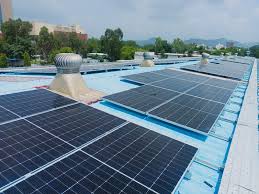 | Commercial Solar Rooftop System Commercial Solar Rooftop System The Commercial Solar Rooftop System is a cost-effective solution for offices, shops, malls, hospitals, schools, and commercial buildings. View product → |
Frequently asked questions
What must be checked before designing a commercial solar system?
Confirm roof or ground area, structural capacity, shading, electricity bills, sanctioned load, tariff, operating hours, safety access, and the intended grid-connection arrangement.
How does an EPC team convert site data into a project design?
The team uses survey measurements, load data, and utility constraints to size modules and inverters, design strings, cables, mounting, protection, monitoring, and expected energy yield.
What happens during solar construction, testing, and commissioning?
The EPC team installs mounting, modules, DC and AC equipment, earthing, protection, and monitoring, then checks insulation, polarity, torque, continuity, protection settings, and generation before handover.
Who handles approvals and grid connection for a commercial solar project in Maharashtra?
The project owner and EPC contractor must name responsibilities for the local distribution licensee, application documents, metering, protection requirements, inspection, synchronization, and commissioning records.
How should you compare commercial solar EPC proposals?
Compare the exact system capacity, equipment models, energy assumptions, drawings, inclusions, exclusions, schedule, warranties, performance commitments, testing records, maintenance scope, and payment milestones.
Related product
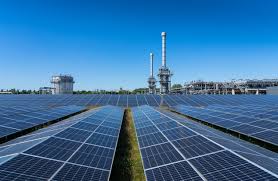 | Industrial Solar System Our Industrial Solar Power Plants are designed for factories, warehouses, and large-scale manufacturing units. View product → |