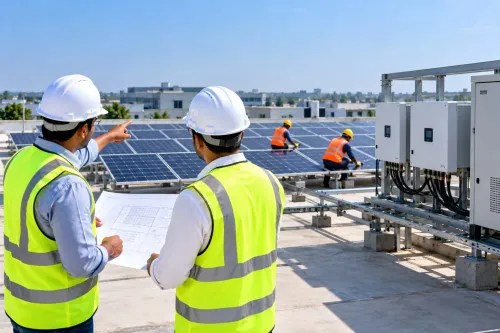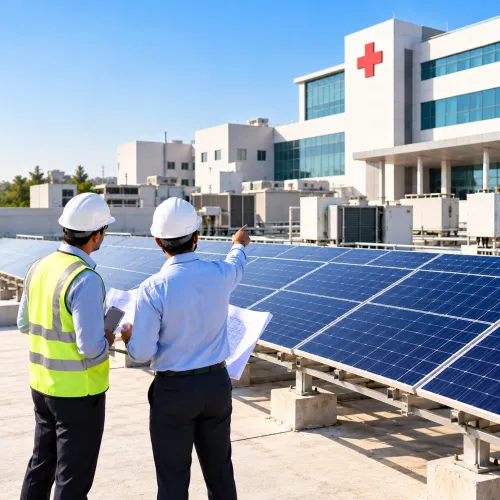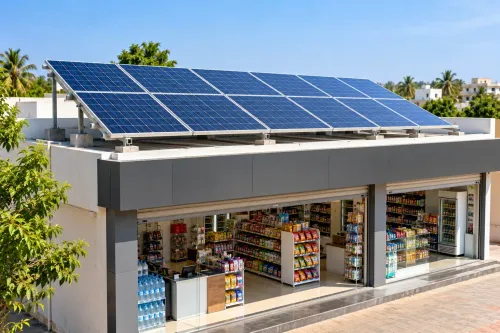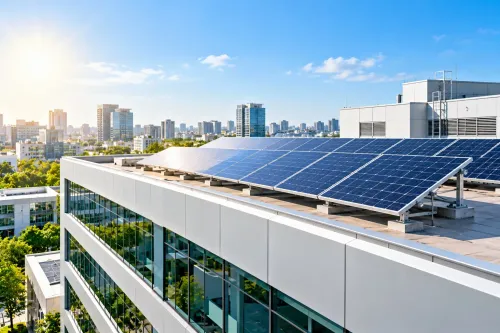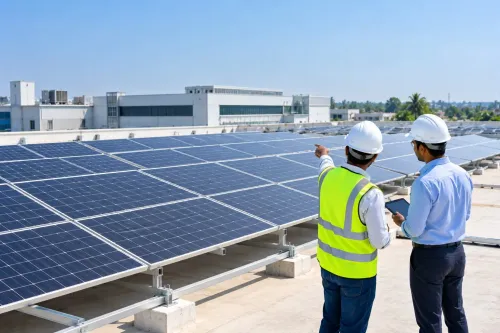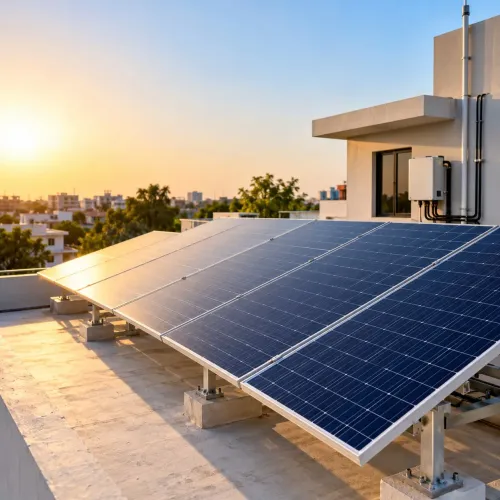
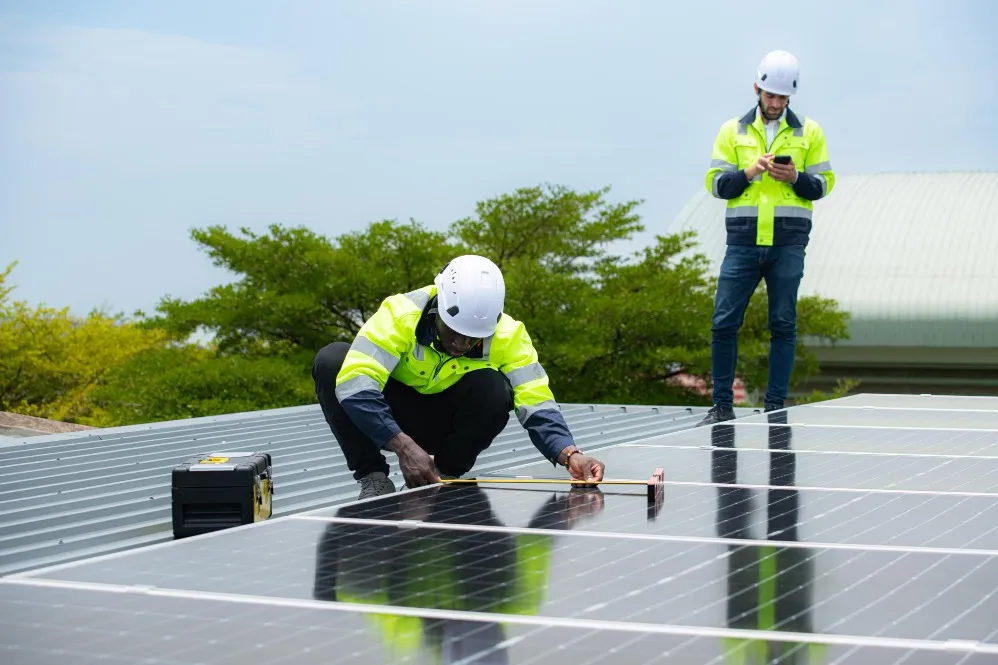
Industrial electricity consumption is significantly higher than residential or commercial usage. Manufacturing plants, processing units, warehouses, cold storage facilities, and heavy machinery operations require continuous power throughout the day. This is one of the major reasons industrial solar plant installation has gained momentum across Maharashtra.
For industrial businesses in Nashik, rising electricity tariffs directly impact operational costs and profitability. Solar power systems provide a practical way to reduce dependency on conventional electricity while improving long-term energy management.
How Industrial Solar Plants Work
Industrial solar systems use photovoltaic panels to convert sunlight into electricity. The generated power can be used directly within the facility, reducing power drawn from the electricity grid.
Most industrial installations are on-grid systems, meaning the plant remains connected to the utility network while utilizing solar energy during daylight hours.
Some industries also integrate battery backup systems for critical operations, though this depends on operational requirements and budget.
Why Industries Are Adopting Solar Power
High Daytime Electricity Usage
Industrial operations usually consume maximum electricity during daytime hours, which aligns perfectly with solar energy generation.
Reduction in Operational Costs
Electricity bills form a major part of industrial overhead expenses. Solar systems help reduce recurring monthly costs over the long term.
Better Financial Planning
Predictable energy generation helps businesses manage operational budgets more efficiently.
Sustainability and Compliance
Many industries are now focusing on sustainability goals and environmentally responsible practices.
Types of Industrial Solar Installations
Rooftop Solar Systems
These systems are installed on factory rooftops, warehouses, or industrial sheds.
Ground-Mounted Solar Plants
Suitable for industries with available open land near operational facilities.
Solar Carport Installations
Parking areas can also be converted into energy-generating spaces using solar structures.
Key Factors to Consider Before Installation
Industrial solar projects require careful engineering and planning.
Energy Consumption Analysis
A detailed study of electricity usage patterns helps determine optimal system size.
Roof or Land Assessment
The installation area must be evaluated for:
- Structural strength
- Shadow-free exposure
- Accessibility
- Drainage and maintenance requirements
Electrical Infrastructure Compatibility
Existing electrical systems should support safe integration with solar equipment.
Regulatory Approvals
Industrial solar projects often require utility approvals, safety clearances, and net metering documentation.
Understanding Solar EPC Services
Industrial projects are typically handled through Solar EPC (Engineering, Procurement, and Construction) models.
A solar EPC company manages:
- Site assessment
- Engineering design
- Procurement of components
- Installation
- Electrical integration
- Testing and commissioning
- Regulatory coordination
This approach simplifies project management for industrial clients.
Common Questions Industries Ask
Will Production Stop During Installation?
Most solar projects are executed in phases to minimize operational disruption.
How Long Does Installation Take?
Project duration depends on system size, engineering complexity, and approval timelines.
Is Solar Reliable for Industrial Use?
Modern solar systems are widely used across industrial sectors and can operate efficiently for decades with proper maintenance.
Maintenance and Long-Term Performance
Industrial solar plants require periodic maintenance to maintain performance levels.
Typical maintenance activities include:
- Panel cleaning
- Electrical inspections
- Inverter monitoring
- Structural checks
Regular maintenance improves system efficiency and extends equipment lifespan.
Industrial Solar Is Becoming a Strategic Investment
Industries are increasingly treating solar power as part of long-term operational planning rather than only an energy-saving initiative. In regions like Nashik, where solar conditions are favorable, industrial businesses are exploring solar turnkey projects to improve efficiency and reduce energy-related financial pressure.
Solar EPC providers such as SunsetLife Solar Pvt. Ltd support industrial customers through planning, engineering, installation, and project execution tailored to large-scale energy requirements.
Keywords