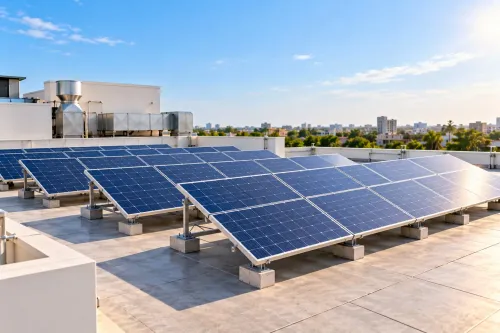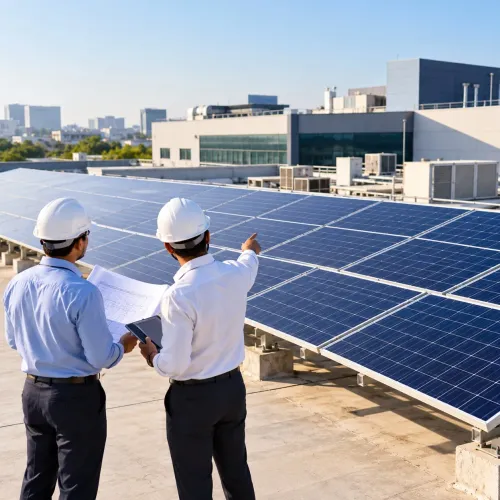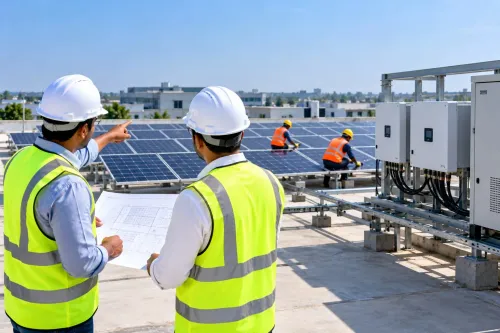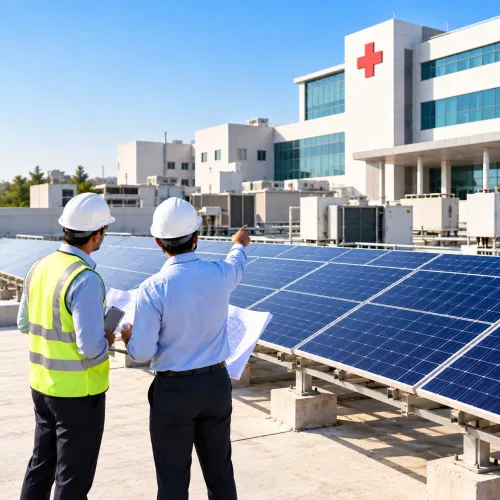
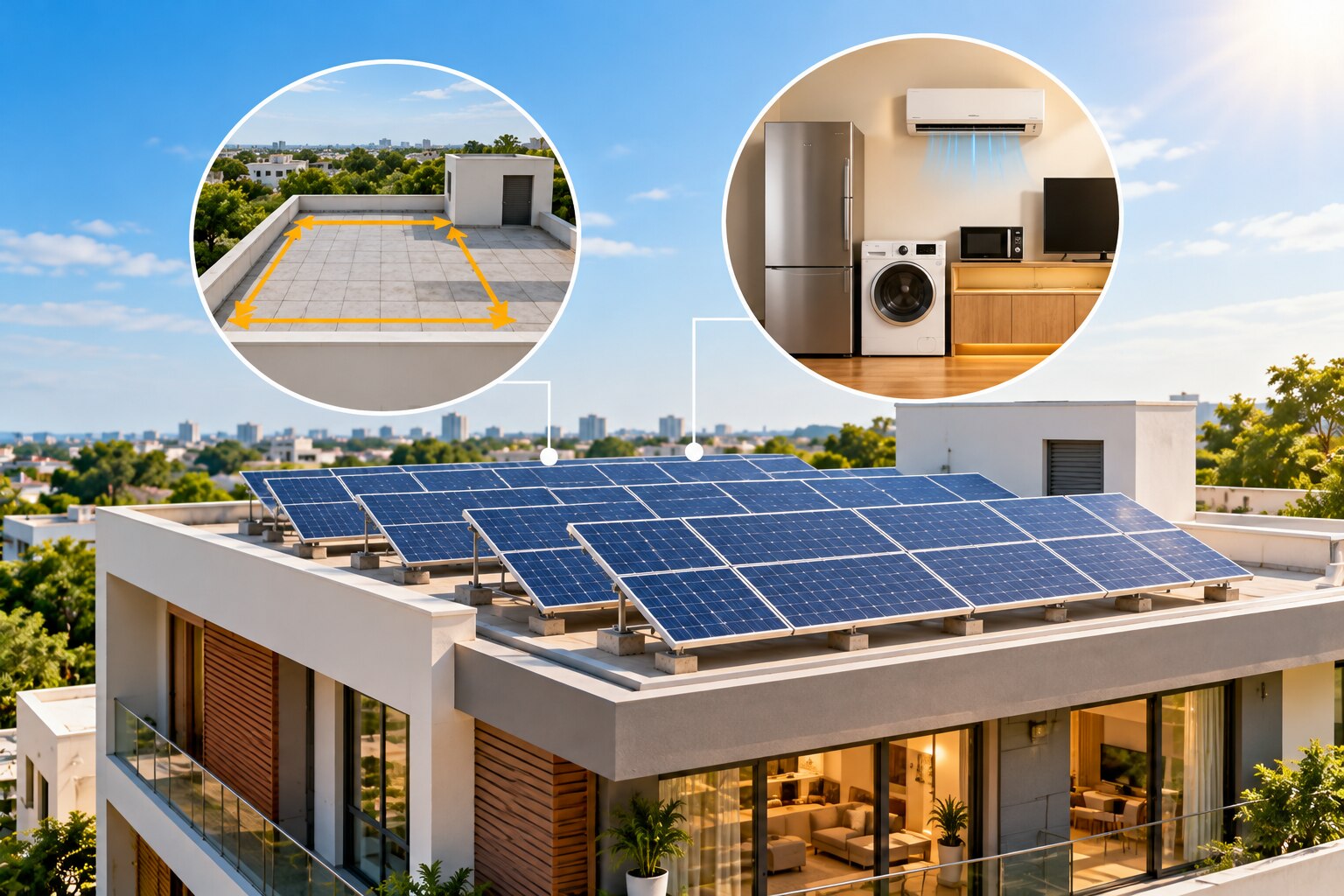
The right solar setup starts with two separate limits: how much electricity you use and how much unshaded, structurally suitable roof you can devote to panels. By the end, you will be able to turn 12 months of kWh data into a capacity target, test whether your roof can hold it, and identify the design compromises before requesting a quotation.
Key takeaways
- Add 12 months of kWh, not rupee totals, to measure annual electricity use.
- Divide annual kWh by expected solar yield to estimate required PV capacity.
- Measure shade-free roof area before deciding how many panels will fit.
- Reduce or increase system size after checking tariffs, loads and future plans.
Start with 12 Months of kWh, Not the Rupee Amount on the Bill
Add the kWh from 12 consecutive electricity bills before you look at the rupee total. The bill amount includes tariffs, fixed charges, taxes and sometimes arrears, so it cannot tell you how much energy your solar system must produce.
- Record the monthly electricity consumption in kWh and the meter-reading dates for all 12 bills.
- Add those readings to get annual kWh. If billing periods differ, divide each bill’s kWh by its billed days, then multiply the result by 365.
- Divide annual kWh by 12 to calculate average monthly kWh.
- Mark the highest-use months as your seasonal peak usage and investigate the cause, such as air-conditioning, electric heating, pumps or an EV charger.
- Adjust the target for a planned load change, such as a heat pump, electric water heater, home extension or efficiency upgrade.
Your first energy target is the annual kWh you want solar to offset, not the roof’s total area. A 100% offset is not always practical because export credits, roof shade and daytime demand affect the value of surplus generation.
Keep energy and power separate. Annual kWh measures energy consumed over time; instantaneous demand in kW measures how much power you need at once. Sanctioned load is the utility-approved limit, while connected load is the sum of appliance ratings.
These figures help check electrical capacity and peak operation, but they do not replace the 12-month kWh record.
Convert Annual Electricity Use into a PV Capacity Target
The required solar system size equals desired annual solar production divided by expected annual production per installed kWdc.
Use the utility tariff and interconnection agreement to set the desired production. Aiming to offset 100% of annual consumption makes sense only when exported electricity receives useful credit and the rules do not restrict system size.
Fixed charges, avoided-cost export rates, annual true-up dates, and limits on export compensation can make a smaller target financially better.
Calculate the target in four steps:
- Add your 12 months of electricity use in kWh. Use the total, not the bill amount.
- Choose the annual offset target, such as 80% or 100%, after checking the tariff.
- Obtain expected annual production per kWdc from a site model such as NREL PVWatts. The model uses peak sun hours, roof orientation, shading, temperature, and other losses.
- Divide desired annual production by modeled production per installed kWdc.
For example, 6,000 kWh of desired annual production divided by 1,400 kWh per kWdc produces a target of 4.29 kWdc. The performance ratio captures the gap between ideal sunlight and delivered energy after inverter, wiring, soiling, temperature, and availability losses.
This annual calculation does not guarantee enough power during evening peaks. Check timing for air-conditioning, electric heating, pumps, and EV charging separately. Modules are rated in DC, while the inverter delivers AC; installing more DC capacity than inverter capacity can increase production hours but causes clipping during the strongest sunlight.
Calculate Usable Roof Area and Panel Count
An array fits only when its electrical output and physical footprint both pass: calculate panel count from the target capacity, then test those modules against the usable roof area.
Use this panel wattage formula: required modules = target kWdc × 1,000 ÷ panel wattage, rounded up. Eighteen 450-watt modules produce 8.1 kWdc; eighteen 400-watt modules produce 7.2 kWdc. Higher wattage can reduce module count, but it does not reduce required access space.
Measure the gross roof area, then draw each roof plane to scale using the panel dimensions. Include module gaps, row spacing, mounting clearances and the layout direction; a rectangular roof rarely provides the same rectangular space after design constraints are applied.
Mark and subtract every feature that prevents a panel or access route:
- Parapets, ridges, hips and valleys
- Water tanks and solar water heaters
- Skylights, dormers, vents and chimneys
- Maintenance walkways and equipment clearances
- Fire setbacks and emergency access paths
- Permanently shaded sections
The remainder is your shadow-free usable area. Compare it with the total module footprint plus spacing, rather than multiplying panel area by module count alone. Confirm fire setbacks with the authority having jurisdiction and serving utility because enforceable requirements vary by roof type and location.
If the required modules do not fit, consider higher-wattage panels, another roof plane, a ground array or a smaller energy offset. Also verify structural loading, attachment points and roof life before installation; replacing the roof later can require costly panel removal and reinstallation.
Check Shade, Direction, Roof Condition and Electrical Layout
A large roof can still deliver poor solar output if trees, neighbouring buildings, tanks or parapets shade the modules. A shadow-free east- or west-facing plane can outperform a partly shaded south-facing plane, so roof orientation must be judged with a shade study rather than a compass alone.
Roof condition and electrical arrangement decide whether the area is usable:
- Check the slab, waterproofing, corrosion and roof age before adding module, rail and ballast loads. Repair leaks first; removing an array later is expensive.
- Mark parapet shading, water tanks, solar heaters, skylights and service paths. A parapet can shade the lowest module rows during morning and evening.
- Trace the cable route to the main distribution board. Long runs, undersized conductors, limited breaker space or a weak connection point can increase losses or require electrical upgrades.
- Confirm earthing, surge protection, isolators and inverter ventilation. An inverter installed in a hot, inaccessible corner is difficult to maintain.
| Site condition | What it changes | Practical response |
|---|---|---|
| South-facing, unshaded plane | Strong annual production | Use it if structure and access work |
| East- or west-facing plane | Shifts output toward morning or afternoon | Match it to operating hours |
| Partial shade from trees or buildings | Cuts output and can affect a whole string | Split arrays or use module-level electronics |
| Flat roof with parapets and obstructions | Reduces shadow-free area and row spacing | Exclude shaded sections from the panel count |
Do not size the inverter from panel kW alone. An inverter DC-to-AC ratio above 1.0 adds module capacity and accepts occasional clipping; shading, orientation, climate and utility limits determine whether that trade-off makes sense.
Choose the Practical System Size After Comparing Loads, Tariffs and Future Plans
Choose the smallest array that meets your post-change annual energy target without exceeding roof, service-panel or utility limits. Compare annual kWh offset separately from instantaneous demand: a system can produce enough yearly energy yet leave you importing power during an evening EV charge or air-conditioner peak.
| Option | What to compare | Practical decision |
|---|---|---|
| Roof-limited | Shadow-free area, panel count and roof-plane output | Reduce capacity or use higher-wattage panels; do not fill shaded space simply to reach a target |
| Tariff-limited | Export credit, net-metering cap, fixed charges and annual true-up | Stop below 100% annual offset if surplus electricity earns little or cannot be credited |
| Load-limited | Sanctioned load, connected load and instantaneous demand | Confirm the service-panel and utility limits before selecting inverter size |
| Future-load | EV, heat pump, electric water heater or home addition | Size for the expected post-change kWh, then verify wiring and sanctioned load |
| Battery-backed | Battery power in kW and capacity in kWh | Match kW to simultaneous loads and kWh to the evening or outage duration; allow for round-trip losses |
Your connected load is the total of equipment nameplates, while instantaneous demand is what those loads draw together. A battery with adequate capacity can still fail to run a pump and air conditioner simultaneously if its battery power rating is too low.
Ask SunsetLife Solar Pvt. Ltd to model last year’s use, planned loads, export limits and battery operation in one proposal. Reject any quote that sizes only from roof area or sanctioned load; request projected self-consumption, exports, imports and peak demand.
Related products
 | Residential Solar Rooftop System Residential Solar Rooftop System Residential Solar Rooftop Systems are designed to convert sunlight into clean, reliable electricity for homes, helping homeowners reduce energy costs... View product → |
 | Commercial Solar Rooftop System Commercial Solar Rooftop System The Commercial Solar Rooftop System is a cost-effective solution for offices, shops, malls, hospitals, schools, and commercial buildings. View product → |
Frequently asked questions
Why should you use 12 months of kWh instead of the electricity bill amount?
The kWh total measures energy consumption. The rupee amount also includes tariffs, fixed charges, taxes and possible arrears.
How do you convert annual electricity use into a solar capacity target?
Add your 12 monthly kWh figures, then divide annual consumption by the expected annual energy yield per kW at your site.
How do you calculate the number of solar panels your roof can hold?
Measure usable, shade-free roof area, allow space for access and equipment, then divide the remaining area by each panel's footprint.
What roof and electrical checks affect solar system size?
Check shade, roof direction, roof condition, inverter location, cable routes, main-panel capacity and available electrical phases.
How do you choose the final solar system size?
Compare the capacity target with roof limits, current loads, electricity tariffs and planned additions such as an EV or air conditioner.
Related products
 | On-Grid Solar Power System On-Grid Solar Power Systems are connected to the electricity grid, allowing users to export excess power and benefit from net metering. View product → |
 | Solar Panel Installation Solar Panel Installation Services We provide end-to-end Solar Panel Installation Services, including site survey, system design, installation, testing, and commissioning. View product → |
 | Hybrid Solar Power System Hybrid Solar Power Systems combine the benefits of on-grid and off-grid solutions. View product → |
 | Industrial Solar System Our Industrial Solar Power Plants are designed for factories, warehouses, and large-scale manufacturing units. View product → |