
Restaurants often use their most electricity during daylight, but the savings depend on whether solar production matches refrigeration, HVAC, kitchen and ventilation demand. You will be able to test that match against your bills, tariff, roof constraints and Maharashtra export rules before comparing proposals.
Key takeaways
- Match solar production with cooking, refrigeration, HVAC, and lunch-service demand.
- Use 12 months of bills to calculate consumption, export, and demand-charge savings.
- Check roof area, shade, transformer capacity, and grid-export limits before sizing.
- Compare warranties, generation estimates, degradation assumptions, and battery economics before signing.
Which Restaurant Loads Can Solar Offset During the Day?
A restaurant can use solar directly only when its equipment is drawing power while the panels are producing it. A restaurant daytime load profile with lunch service, active cooking, lighting, refrigeration, HVAC, exhaust fans and make-up-air equipment creates strong overlap; a late-night operation leaves more solar energy unused or exported.
| Restaurant schedule | Solar overlap | Direct-offset result |
|---|---|---|
| Lunch and dinner service | High midday demand, lower demand after sunset | Strong direct use during lunch preparation and service |
| All-day operation | Refrigeration, HVAC, lighting and pumps run through production hours | High self-consumption across most of the solar window |
| Night-focused operation | Small daytime load, large evening cooking and cooling load | Lower direct use; batteries or export credits affect the result |
Refrigeration and point-of-sale systems often run during daylight even before opening, while HVAC, kitchen equipment, water pumps and ventilation rise with staff and customer activity. Compare those loads with hourly or 15-minute solar production, not panel capacity alone.
Use 12 months of bills to identify the restaurant’s operating pattern, then separate daytime kWh from nighttime kWh. Daytime consumption is the portion solar can offset directly; nighttime consumption still needs the grid or a battery.
If midday production exceeds live demand, the excess receives the utility’s export credit, which may be worth less than a retail electricity charge.
How to Calculate Savings From 12 Months of Bills
A 12 months of electricity bills shows the restaurant’s total use, but it cannot show when that electricity was consumed. Obtain 15-minute or hourly interval data from the utility for the same period, then match each interval with the proposed solar output.
This reveals how much generation serves the restaurant directly and how much becomes exported power.
Collect these bill details before accepting an annual-kWh estimate:
- Tariff category and every energy rate, including time-of-day prices
- Sanctioned load and contract demand
- Monthly recorded maximum demand and the demand-charge calculation
- Fixed charges, taxes, meter charges and export-credit rules
- Imported kWh and exported kWh, where net metering already exists
| Figure | What it reveals | How to use it |
|---|---|---|
| Interval consumption | Daytime load available for direct solar use | Offset each interval before counting exports |
| Solar generation by interval | Output that coincides with restaurant operation | Apply the correct energy rate |
| Recorded maximum demand | Whether solar reaches the tariff’s peak-demand interval | Reduce demand charges only when that peak falls |
| Exported energy | Generation exceeding on-site use | Apply the utility’s export credit, not the retail rate |
| Fixed charges | Costs solar will not remove | Keep them in the post-solar bill |
Calculate savings by simulating the bill interval by interval. Do not multiply annual solar production by the highest retail rate. A noon-heavy array can produce substantial kWh yet save little if the restaurant’s demand peak occurs during hot late-afternoon service. Compare the simulated pre-solar and post-solar bills, then subtract financing, maintenance and battery costs.
How Roof, Shading and Grid Limits Affect System Size
The largest possible array is often the wrong size: it may not fit the usable roof area, exceed structural capacity, produce power beyond daytime demand, or trigger costly utility work.
Start with a roof plan and a load profile, not a panel count. Mark every area removed by equipment, access requirements and fire clearances; then check the remaining surface for shading throughout the day and across seasons.
A shaded row can reduce its own output and, depending on the electrical design, affect other modules on the same circuit.
- Usable roof area: reserve paths for servicing and keep panels clear of roof penetrations and equipment.
- Structural capacity: obtain an engineer’s assessment for panel weight and wind forces; safe anchoring still matters.
- Shading: model shadows from nearby buildings and rooftop equipment through the day.
- Transformer and connection limits: confirm approved export, service capacity and any protection or upgrade work with the utility before ordering equipment.
- Operating hours: match expected solar output to the restaurant’s open hours and largest daytime loads, rather than annual kWh alone.
An oversized system can export excess electricity at a low credit, hit an export cap, or sit idle after daytime demand is covered. Interconnection approval can also require a transformer or service upgrade, adding cost and delaying commissioning.
Size the array for the power the roof, electrical service and restaurant can use—not the maximum number of panels that can be purchased.
When Net Metering, Demand Charges and Batteries Change the Result
A restaurant does not save the retail electricity rate for every panel-generated unit. Solar offsets electricity at the meter while refrigeration, cooking, ventilation or air-conditioning is running; surplus power earns value only through the utility’s export-credit mechanism.
Check the Maharashtra net metering rules for your tariff category, sanctioned load and connection type. Export limits can restrict the array or prevent you from receiving full credit for a midday surplus. If exported units receive a lower rate than imported units, oversizing the array reduces the return even when annual production looks attractive.
Ask for a comparison using the restaurant’s interval load and tariff:
- Solar used immediately, with no battery
- Solar plus permitted grid export at the credited rate
- Solar plus a battery that charges at midday and discharges during dinner service
Demand charges change the calculation. A panel array reduces them only when it lowers the meter’s highest demand during the tariff’s measured interval. Noon production will not cut a peak set by ovens and HVAC at 5 p.m.; a battery can discharge then, if its controls reserve enough capacity.
Battery savings also carry conversion losses, replacement risk and degradation. Model those costs against the avoided evening tariff, including time-of-day charges. Fixed charges remain even when exported energy offsets annual consumption, so solar will not erase the entire bill. Use an hourly or 15-minute simulation rather than multiplying annual solar output by the retail rate.
How to Compare a Restaurant Solar Proposal Before Signing
Do not sign until the proposal shows hourly solar generation beside the restaurant’s hourly or 15-minute electricity use. Annual kWh alone can hide a mismatch: a large array may produce excess power after lunch while refrigeration, HVAC and cooking loads rise later.
Request these records and calculations:
- A 12-month bill analysis showing tariff category, energy charges, fixed charges, sanctioned load, contract demand, demand charges and time-of-day rates.
- An interval simulation showing self-consumption, exports, battery charging, demand reduction and the remaining grid purchases for each hour.
- A production report with assumptions for roof orientation, shading, losses, degradation and the specific weather data used.
- A project-cost schedule covering panels, inverters, mounting, roof work, permits, wiring, financing, incentives, maintenance and inverter replacement.
PVWatts is useful for checking expected array production, but it does not calculate your restaurant’s bill savings. Compare its output with the installer’s model, then ask why the figures differ.
| Evidence | What it should show | Warning sign |
|---|---|---|
| Production | Monthly and hourly generation | Only a panel-capacity figure |
| Bill impact | Retail imports, exports, demand peaks and credits | Solar kWh multiplied by one retail rate |
| Project cost | Installed price, financing, service and replacement assumptions | No allowance for cleaning or inverter replacement |
SunsetLife Solar Pvt. Ltd should provide these assumptions in writing so you can test the result against your bills, not accept a payback period without its underlying inputs.
Related products
 | Commercial Solar Rooftop System Commercial Solar Rooftop System The Commercial Solar Rooftop System is a cost-effective solution for offices, shops, malls, hospitals, schools, and commercial buildings. View product → |
 | Solar Panel Installation Solar Panel Installation Services We provide end-to-end Solar Panel Installation Services, including site survey, system design, installation, testing, and commissioning. View product → |
Frequently asked questions
Which restaurant loads can solar offset during the day?
Solar can directly supply cooking equipment, refrigeration, lighting, HVAC, exhaust fans, make-up-air systems, and other loads running while panels produce electricity.
How do you calculate restaurant solar savings from 12 months of bills?
Review 12 months of electricity use, billed energy rates, fixed charges, demand charges, and export credits, then compare them with the system’s monthly generation and self-consumption.
How do roof, shading, and grid limits affect restaurant solar system size?
Roof area, panel orientation, shadows from nearby structures, structural capacity, inverter limits, transformer capacity, and the utility’s export rules determine the practical system size.
When do net metering, demand charges, and batteries change the result?
Net metering improves the value of exported power, demand charges reward reducing peak demand, and batteries add value when they shift solar energy to later periods or limit grid peaks.
Related products
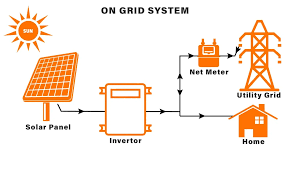 | On-Grid Solar Power System On-Grid Solar Power Systems are connected to the electricity grid, allowing users to export excess power and benefit from net metering. View product → |
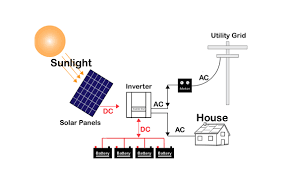 | Hybrid Solar Power System Hybrid Solar Power Systems combine the benefits of on-grid and off-grid solutions. View product → |